Hazard chemicals are those that, following worker exposure, can harm health and the environment. Examples of hazardous chemicals include poisons, toxins, chemicals that cause burns, skin and eye irritation and those that may cause cancer. Many hazardous chemicals are also classified as Dangerous Goods. The chemical properties that cause adverse health effects are known as Health Hazards. The adverse effects can be acute (short-term) or chronic (long-term. Physical-chemical properties can result in immediate injury or damage to property, and these are known as Physical hazards and may include flammables, corrosives, explosives, and chemically reactive and oxidising chemicals. Hazards that affect the biomes or ecosystems are known as Environmental Hazards.
The system provides a materials grid that displays Chemwatch hazard ratings for all materials classified as hazardous chemicals. This information is shown as hazard colour-coded icons.
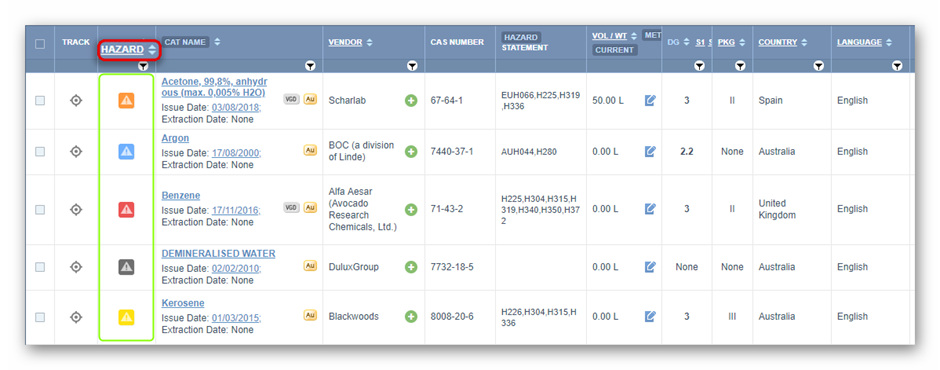
The table below provides the summary of the hazard icons and ratings to the nature of the hazard.
Hazard Category | Rating | Hazard Level | Colour Code | Icon | Nature of Hazard Chemical |
Flammability Toxicity Body Contact Reactivity Chronic | 0/Min | Non | Grey | | Non Hazardous Chemical |
1 | Low | Blue |
| Low Hazardous Chemical | |
2 | Moderate | Yellow |
| Moderate Hazardous Chemical | |
3 | High | Orange |
| Highly Hazardous Chemical | |
4 | Extreme | Red |
| Extremely Hazardous Chemical | |


Was this article helpful?
That’s Great!
Thank you for your feedback
Sorry! We couldn't be helpful
Thank you for your feedback
Feedback sent
We appreciate your effort and will try to fix the article